LetterNine Blog
Spotting Phishing in the AI Era: Habits That Actually Work
Worried your team can't tell a real email from a fake one anymore? You're right to wonder. Here are simple habits that beat today's smarter scams.
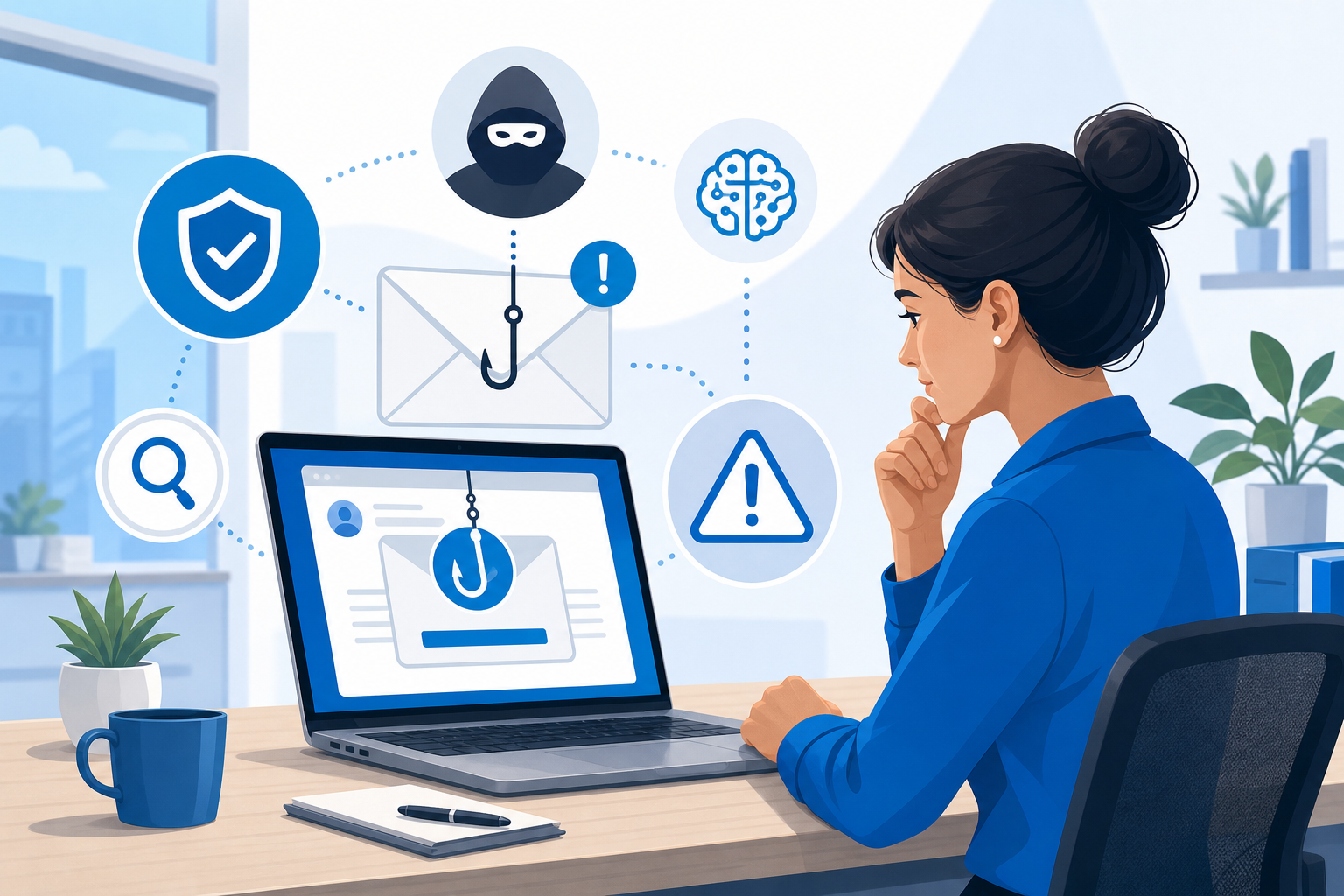
The old advice stopped working
For years, we told people to watch for typos and clumsy wording. That rule is now out of date.
Attackers use AI to write clean, personal emails. They can copy your boss’s tone. They can even clone a voice on a phone call.
So a message that looks perfect isn’t proof it’s real. The good news? You don’t need to spot the fake. You just need a few simple habits that catch it anyway.
Why the scams feel so real now
Phishing is a fake message that tricks you into sending money, data, or a password. Today’s versions are better written and more targeted.
A common one: an urgent email that looks like it’s from the owner. “Pay this invoice today.” Or, “Send me the login, quick.”
The pressure is the point. Urgency makes smart people skip their normal checks. Let’s build checks that stick.
Habit 1: Verify money and password requests on a second channel
Here’s the rule that stops most of these scams cold.
Any request for a payment, a wire, a bank change, or a password gets confirmed a second way. Not by replying to the same email.
If the email came from your boss, call or text the number you already have. If it’s a vendor asking to change bank details, call the contact you’ve used before. Two channels, every time.
Habit 2: Use a simple call-back rule
Make it a team policy, in plain words: “We never move money or share credentials based on one message alone.”
Write it down. Post it where your finance folks will see it. When someone follows the rule and slows down a payment, thank them - don’t rush them.
A short pause is cheap. A wire sent to a criminal is not.
Habit 3: Turn on MFA everywhere
MFA (multi-factor authentication) is a second check beyond your password. Usually a code or a tap on your phone.
Think of it like a deadbolt on top of your door lock. Even if someone steals a password, they still can’t get in.
Turn it on for email, banking, payroll, and any system that holds sensitive data. It’s one of the simplest wins in security.
Habit 4: Short, regular awareness training
People are your best line of defense when they know what to look for.
You don’t need long seminars. A few minutes every month keeps the habits fresh. Show a real-looking fake. Talk through how someone caught it.
When the whole team knows the call-back rule, no single person feels foolish for pausing. That’s the goal.
You don’t have to figure this out alone
These habits are simple, but setting them up and keeping them going takes a little help. That’s where a local partner comes in.
As a security-first MSP, we build these protections in as the baseline, not an add-on. MFA, sensible policies, and training that actually sticks.
If you’d like a hand training your team or a quick check of your defenses, let’s talk. No pressure, just a straightforward conversation. Schedule a call and we’ll walk you through it.