LetterNine Blog
Why Attackers Target Small Businesses (and How to Stop Them)
Think you're too small to be a target? That's exactly why attackers like you. Here's what's really going on - and the simple basics that stop most attacks.
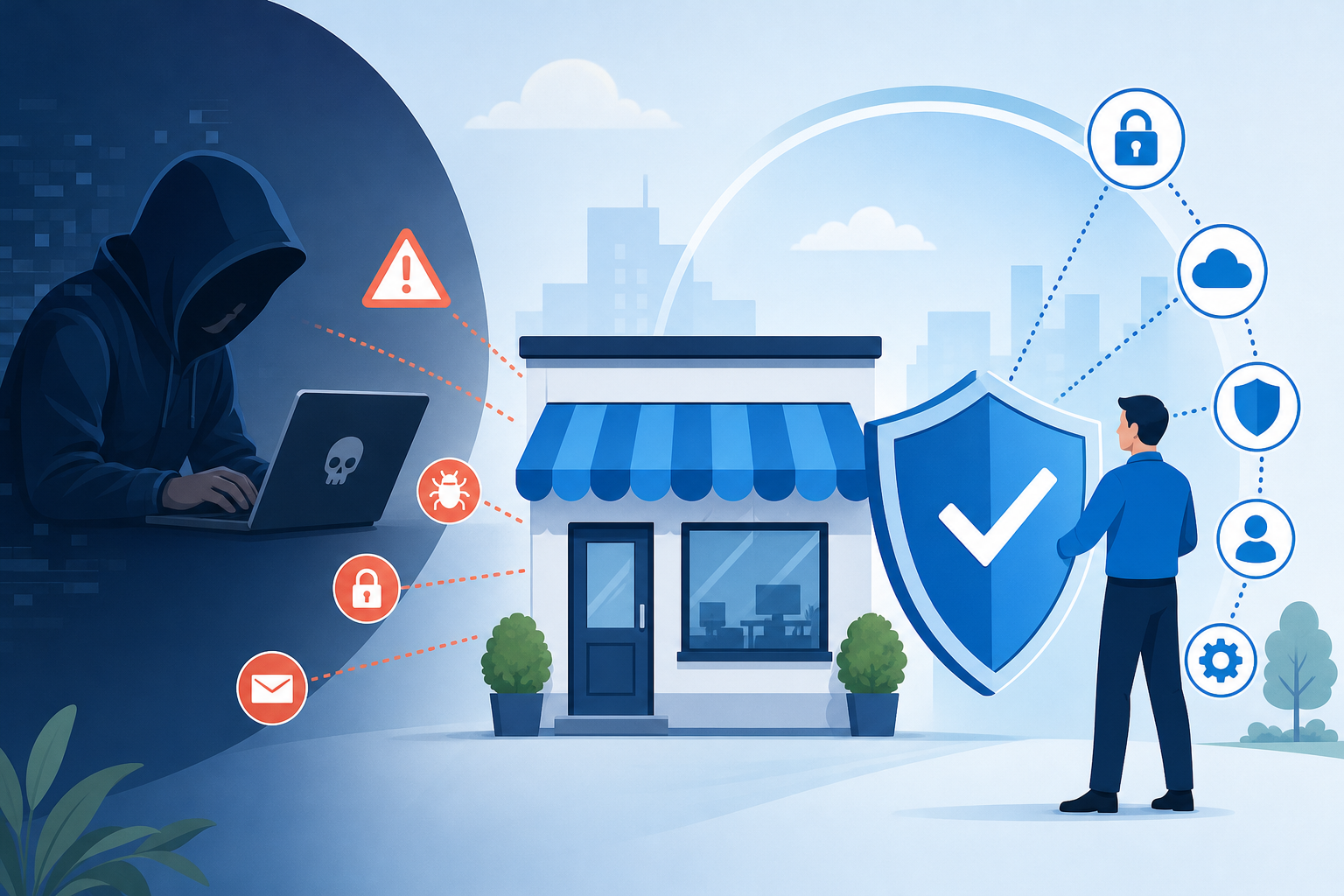
“We’re too small to be a target”
We hear this a lot. It’s a reasonable thought. Why would anyone bother with your business when there are big companies to hit?
Here’s the honest answer: attackers love small and mid-sized businesses. Not in spite of your size - because of it. Let’s walk through why, in plain English, and what actually keeps you safe.
Fewer defenses, easier doors
Big companies have whole security teams. Many smaller businesses don’t. That gap is the point.
Attackers look for the easiest way in. A missing update, a weak password, no second login check - these are open doors. Smaller businesses tend to have more of them, simply because no one’s been watching full time.
The attacks don’t care how big you are
Most attacks today are automated. Think of a robot knocking on millions of doors to see which ones are unlocked. It doesn’t read your company name or check your revenue. It just tries the handle.
So “we’re small” isn’t a shield. To an automated attack, you’re just another door.
You’re a path to bigger partners
Here’s the part people miss. You work with vendors, clients, and partners - some of them large. Attackers know this.
If they can get into your systems, they may reach the bigger companies you connect with. You become the side entrance to a building with better locks on the front.
Ransomware only needs one weak spot
Ransomware is software that locks up your files and demands payment to unlock them. It can stop your business cold.
And it only needs one way in. One clicked link. One unpatched computer. One reused password. That’s why size doesn’t protect you - a single weak spot is enough.
The good news: the basics stop most attacks
This isn’t meant to scare you. It’s meant to show you where to focus. Most attacks aren’t clever. They’re opportunistic. Close the easy doors and you avoid the vast majority of trouble.
Here’s what does the heavy lifting:
- Patching. Keep software and systems updated. Updates fix the holes attackers look for.
- Multi-factor authentication (MFA). A second check beyond your password - like a code on your phone. Even if a password leaks, the door stays shut.
- Backups you actually test. Backups are your safety net. But a backup only helps if it works. Test it so you know you can recover.
- Email filtering. Most attacks arrive by email. Good filtering catches the bad stuff before it reaches your team.
- Staff awareness. Your people are your front line. A little training helps them spot the fake emails and odd requests.
None of these are fancy. That’s the point. The basics, done consistently, stop most attacks. The hard part is keeping them in place over time - and that’s where a proactive partner helps.
Want to know where you stand?
You don’t need to guess whether these basics are covered. We can take a look with you.
Let’s schedule a straightforward security check. We’ll walk through your doors, flag the ones that need attention, and give you clear next steps - no pressure, no jargon.
Schedule a security check. We’ve got you.