LetterNine Blog
Your Phone Is Lying to You: How AI Voice Cloning Is Hitting Cleveland and Charlotte SMBs
What if the voice on the other end of that urgent call isn't really your boss? AI voice cloning is now targeting small and mid-sized businesses, and a simple verification habit can stop a costly wire transfer before it goes through.
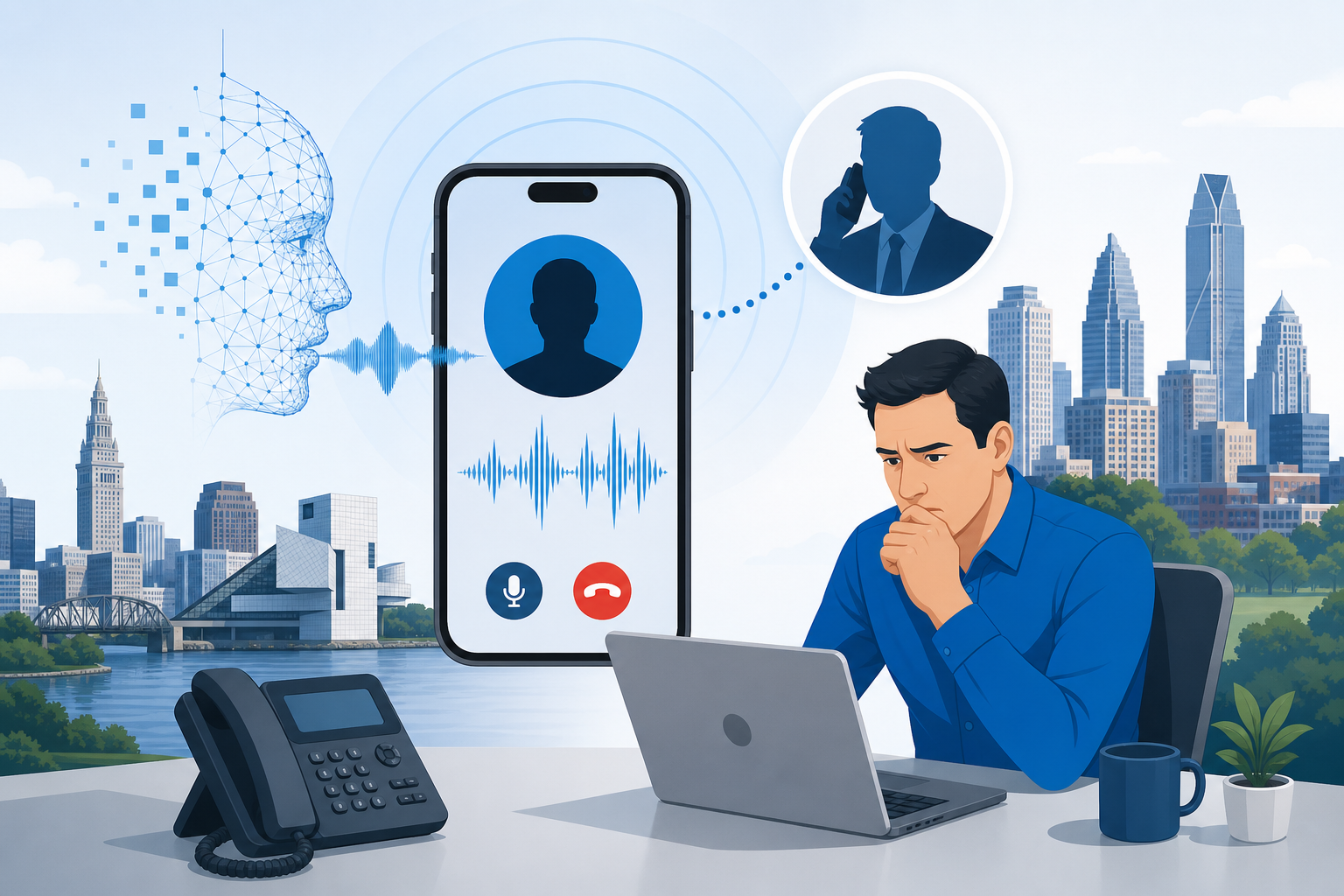
That Voice Sounds Exactly Like Your CEO - Because It Might Not Be
Picture this: your office manager gets a call. It sounds exactly like the owner. The owner is traveling, the connection is a little rough, and they need a wire transfer done today. Urgent. Confidential. Do it now.
This isn’t a movie plot. It’s a documented attack pattern hitting small and mid-sized businesses (SMBs) right now - including businesses in places like Cleveland and Charlotte.
AI voice cloning tools can copy someone’s voice from as little as a few seconds of audio. That audio is easy to find. A LinkedIn video, a podcast appearance, a voicemail greeting. Once the voice is cloned, attackers use it to impersonate executives, owners, or trusted colleagues.
And it’s not just phone calls anymore.
Microsoft Teams Is Now a Target
Microsoft Teams is the daily hub for millions of small businesses. It feels internal and safe. That feeling is being exploited.
Security researchers have documented attacks where fake or compromised accounts send Teams messages - and in some cases, audio or video clips - that impersonate someone inside the company. [VERIFY: confirm current documented attack vector specifics before publishing.] The goal is the same as always: get someone to move money, share credentials, or open a door they shouldn’t.
Collaboration tools feel like a closed room. Attackers know that. They use that trust against you.
Why SMBs Are Getting Hit
Larger companies often have multi-step approval processes for wire transfers. Smaller businesses move faster. That speed is an asset - until it becomes a vulnerability.
In a 10- or 20-person shop, it’s not unusual for one person to handle finances and to take direction directly from the owner. There’s less red tape, which means there’s less friction to stop a fraud.
Attackers understand your workflows better than you might expect. They do their homework on LinkedIn, your website, and your social media before they ever make the call.
A Simple Verification Protocol - That Actually Works
You don’t need expensive software to stop this. You need a habit.
Here’s a straightforward protocol any SMB can put in place today:
1. Set a verbal code word. Pick a word or short phrase that only your core team knows. Anyone requesting an urgent financial action must say it. Change it periodically. Don’t write it in email or Teams.
2. Call back on a known number. If you get an urgent request - by phone, Teams, email, or voicemail - hang up or close the chat. Call the person back using a number you already have saved. Not a number they gave you in that message.
3. Require two-person approval for wire transfers. One person initiates. A second person confirms by calling the requester back on a known number. This single step stops most fraud cold.
4. Slow down the urgency. Real emergencies can survive a two-minute verification call. Scammers rely on urgency to short-circuit your judgment. If someone is pressuring you not to verify, that pressure itself is a red flag.
5. Train your team - not just your finance person. Anyone who answers the phone or responds to Teams messages can be a target. A short team conversation about this threat is worth more than a lengthy policy document nobody reads.
What We’re Seeing in Our Area
We work with small businesses across our local markets. The pattern we’re hearing about - from peer MSPs, security advisories, and industry groups - is consistent: voice-based fraud is increasing, the technology behind it is getting cheaper, and SMBs without a verification habit are the most exposed. [VERIFY: confirm any specific local incident data before citing.]
This isn’t a reason to panic. It’s a reason to put one new habit in place this week.
The Tech Side: What We Can Do Together
Beyond the human protocol, there are technical layers that make these attacks harder to pull off:
- Multi-factor authentication (MFA) - a second check beyond your password - makes it much harder for attackers to impersonate employees inside your systems.
- Conditional access policies on Microsoft 365 and Teams can flag or block logins that don’t match expected patterns.
- Security awareness training helps your team recognize social engineering before it works.
These aren’t exotic tools. They’re the security-first baseline we set up for every client we work with.
You Don’t Have to Figure This Out Alone
Voice cloning sounds futuristic. The defense against it is straightforward. A verification habit costs nothing. The right technical foundation costs less than you might think.
If you want to talk through where your business stands - no pressure, no sales pitch - we’re happy to take a look with you.